
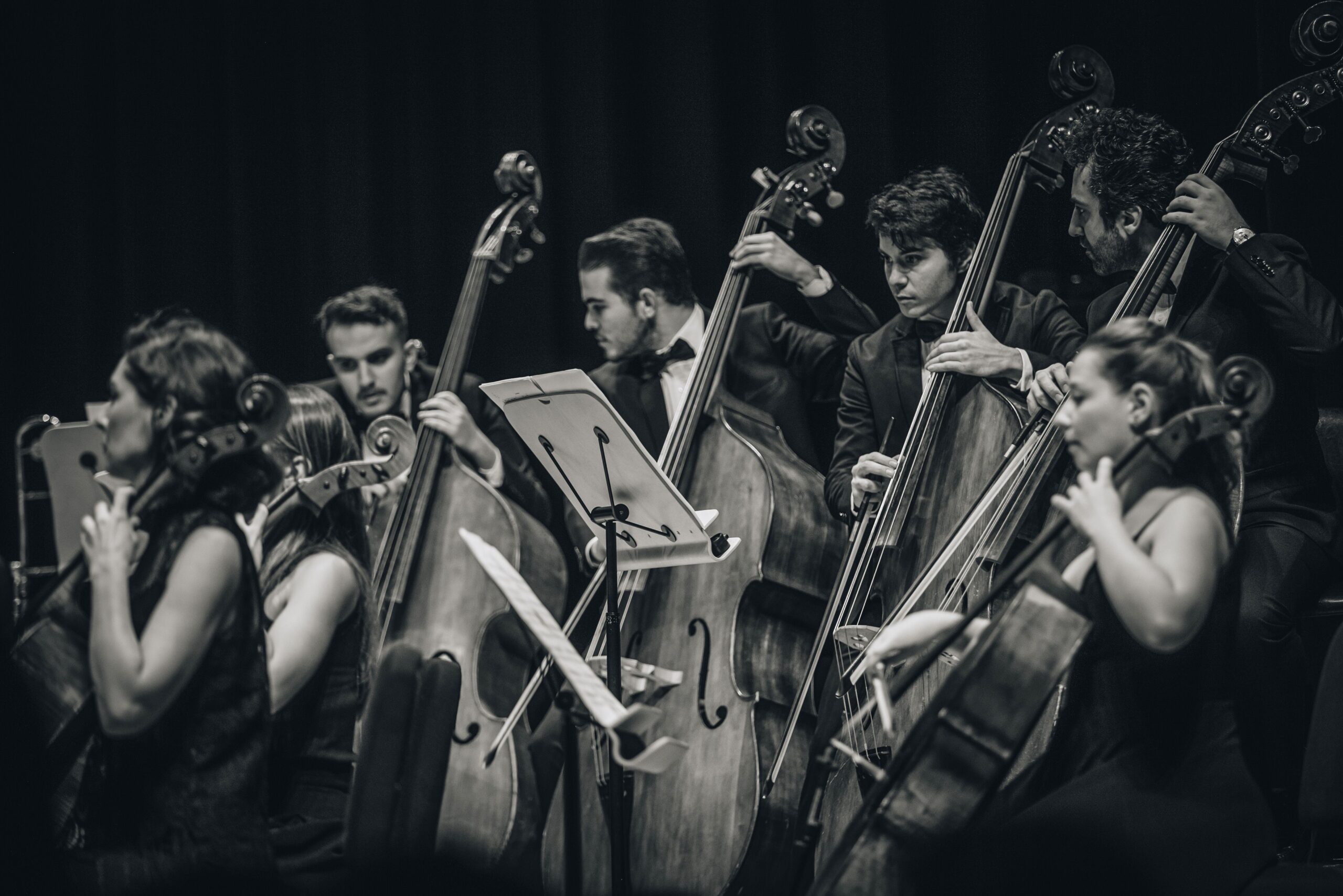
Anyone attending a symphony concert for the first time or after a long absence quickly realizes: the concert hall has its own rules. Some make sense, others seem intimidating, and still others are historically rooted and are followed almost reflexively to this day. This is precisely where the Etiquette in the concert hall they are not merely decorations of a supposedly higher culture, but part of a social choreography intended to make concentrated listening possible.
At the same time, the Analysis of classical music customs more important than ever today. The audience is changing, many halls are full again, and new groups of visitors bring different expectations. Anyone coming from pop, film, or jazz culture rightly asks: Why is nobody clapping between movements here? Why is the audience so quiet? And why does even a coughing fit seem to trigger a minor national crisis?
This article explains which rules at a concert really matter, which myths can be calmly discarded, and why certain rituals have more to do with history, power, and social exclusion than one might think at first glance.
Why concert hall etiquette is a major issue again today
The return of the audience makes the question of proper behavior in the hall visible again. According to the Music Information Center, visiting 7,6 % of people aged 14 and over in Germany regularly attend concerts, 59,8 % at least occasionallyMusic Information CentreThis is not an irrelevant niche, but a large cultural space with many unwritten rules.
| Key figure | Value | Year |
|---|---|---|
| Regular concertgoers aged 14 and over | 7,6 % | 2025 |
| Occasional concertgoers aged 14 and over | 59,8 % | 2025 |
| Annual ticket sales of state-supported orchestras | over 5.2 million. | current |
That classical music is by no means supported only by a shrinking remnant audience is also underlined by a look at the market: state-supported orchestras sell over 5.2 million tickets, reach classical festivals 5.4 million visitors (Tagesspiegel).
The figures for the end of the season of many orchestras and theaters, classical music festivals, and classical open-air promoters show a clear trend: the classical music audience is there, in some cases even stronger than before the coronavirus pandemic.
So when more people return or join anew, different listening habits collide. Precisely for this reason, rules of etiquette in the concert hall are not merely the cultivation of tradition, but a current issue of cultural participation.
Which rules truly serve music
Not every rule is elitist. Some are simply acoustically necessary. Anyone who listens to classical music often experiences long narrative arcs, subtle gradations of dynamics, and moments in which a quiet rustle seems louder than a horn solo. That is why basic etiquette is surprisingly pragmatic: turn phones off completely or at least silence them without vibration, do not film, do not take photographs, do not talk during the performance, and it is better to unwrap candy before it begins (Elbphilharmonie; Kakadu).
Punctuality is not harassment either. Arriving late not only disrupts sightlines, but also collective attention. Particularly in a classical concert, the audience is part of a temporary silent community. The writer and Nobel laureate Elias Canetti described such gatherings as a special form of closed crowd: bounded, ritualized, and aligned toward a common focus. In the concert hall, this focus is first the conductor, then the music itself.
Therefore, newcomers should remember a simple sequence: arrive early, take your seat in good time, turn off your phone, prevent the urge to cough, and then simply observe. Most uncertainties resolve themselves within a few minutes.
Intermittent applause, black clothing, and the myth of the serious concert
The best-known uncertainty concerns the applause. Should one clap between movements? The short answer is: at a classical concert usually no, at the opera sometimes very much so. According to etiquette experts like Uwe Fenner, this restraint serves above all not to tear the suspense arc of the work; demonstrative reactions are considered more appropriate at the end (river passages).
But the important thing is: this rule has become historical, not natural. In the 18th and early 19th centuries, reactions were much more spontaneous. Arias were repeated, movements were interrupted with applause, and concerts were more communicative. It was only with the cult of genius in the 19th century that the concept of the work as an almost sacred whole emerged. As a result, the conductor changed from a time-keeper to an interpreter, almost to the high priest of an art religion.
This is also the reason why musicians traditionally wear black. It is not primarily about mourning or austerity, but rather about visual restraint. The individuality of the performers is supposed to take a backseat to the work. This is functional, but also symbolic: the collective disappears in favor of the idea of pure music.
This staging has a political dimension. Whoever stands at the top, is visible, and commands attention exercises power.
Which rules of etiquette are useful in the concert hall
The trickiest question is not, Whether "ob" is an abbreviation for something specific or a typo in your source text, it translates to **whether** or **if** in English (from German, for example). If you intended a specific context, please provide the full sentence. that there should be rules of etiquette in the concert hall, but which serve the music and which primarily mark social boundaries. Rules that protect the listening experience are sensible: quiet, punctuality, no smartphone light, no loud conversations, no rustling of food wrappers. Less convincing, on the other hand, is the informal harshness with which newcomers are sometimes punished.
This tension is especially evident during applause between movements. Anyone who applauds too early out of genuine enthusiasm is not committing a cultural crime. They are merely showing that they are not yet familiar with the implicit codes. An open concert culture should be able to handle that. Because if the classical concert wants to survive and grow, it must not fail at the threshold of the hall.
This also applies to clothing. Today it is much freer than in the past. Many venues consider neat casual wear to be completely sufficient. What is decisive, therefore, is not so much the black suit in the audience as respect for the shared acoustic space. The external form is becoming more liberal, while acoustic discipline remains.
Why you don’t play ‘only second fiddle’
The idiom of the ‘second fiddle’ sounds like a minor matter. In the orchestra, it is not. Second violins, violas, cellos, double basses, or other tutti voices often carry structures, rhythms, and harmonic tension. They are less frequently exposed in the foreground, but they are indispensable to the whole.
Right here, the concert audience can learn a great deal: classical music is not just a showcase for soloists. It is a finely balanced network of relationships in which secondary voices often secure the meaning of the whole. This applies musically as well as socially. In the hall, too, no one plays just an unimportant supporting role; through its behavior, the audience helps sustain the performance.
The fact that, in our nationwide trend analysis last winter, 60 percent of classical music events still had lower attendance than before the pandemic is now history.
When more people come again, this very mutual support will be decisive. Concert culture is not a museum, but a living practice that thrives on consideration, attention, and curiosity.
How to go to your next concert relaxed and safe
For concertgoers, a simple orientation is enough in the end. First: Prepare practically for the visit. Arrive on time, check coat check and phone, briefly read the program. Second: Pay attention to the acoustic space. Avoid anything that audibly distracts. Third: Observe the audience if you are unsure about the applause. After the last movement or when the conductor lowers their arms completely, you are almost always right.
It is also helpful not to view concerts as a test. The Analysis of classical music customs It may show many rituals, but its core is simple: the music should be able to work its magic undisturbed. Everything else is just an accessory. Whoever enters into it with an openness does not have to be afraid of being ‘wrong.’.
By the way, a sober look at barriers to entry is also worthwhile. According to a Forsa survey, like 88 % the German Mozart or Wagner, but only 20 % attended a classical concert in the year in question; frequent reasons were lack of time, costs, and lack of interest (WORLD). The task of the houses is therefore not to test new visitors, but to welcome them.
Therefore, anyone entering the concert hall should neither appear overly polished nor freeze in awe. It is enough to be attentive. Then no one plays second fiddle, neither in the orchestra nor in the audience.
 Deutsch
 English
 Italiano
 Español